Is understanding personhood and citizenship important for studying politics?
Yes, understanding personhood and citizenship will help sustain a society’s participation. To have a clear understanding of; who is legally a person/citizen, their entitled legal rights, and the limitations of these rights, provides one knowledge needed to exercise their rights within society.
In the context of the previous question, briefly discuss ONE ASPECT of personhood or citizenship that interests you?
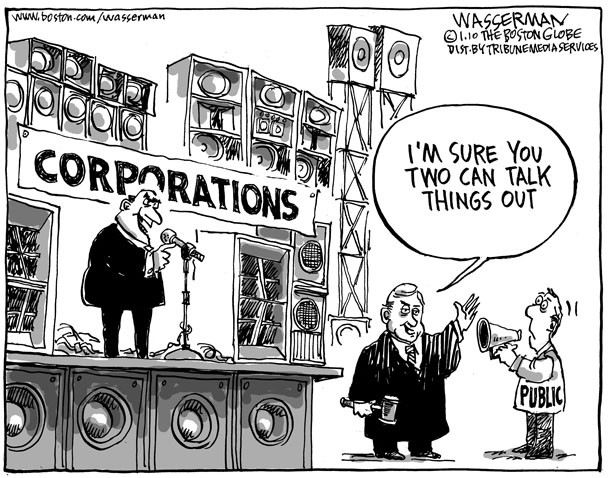
What is the difference in personhood for humans vs. corporations?
Based on the above, STATE YOUR PRELIMINARY RESEARCH QUESTION.
Who is a person or corporation, and what rights are granted under the legalities of personhood?
Annotation:
Researcher Rahman Sabeel, the author of Corporate Power and the Unmaking of American Democracy, traced the origin of human rights under corporate personhood to landmark cases such as Bank of the United States v. Deveaux, and Santa Clara County v. Southern Pacific Railroad.
Deveaux defined corporate personhood in that “corporations were to be understood as associations of persons” (Sabeel), while the Santa Clara County court case established “legal fiction of corporate personhood itself” (Sabeel).
These landmark cases and those that followed have laid the legal foundation for corporate personhood to exist, as the limitations on humanistic rights for corporate personhood are continuing to expand.
Sabeel attributes the expansion of corporate personhood rights to self-interest corporate actors, lawyers, and judges who used strategic litigation to change the limitations through “crucial decisions establishing corporate rights”.
Some of the corporate rights established by these groups are similar to basic rights given to citizens such as property rights and protection from government coercion, and even speech rights.
Sabeel adds that cases for social justice movements such as Dred Scott and Plessy were used as legal vehicles to bring about new rights for corporations. Some scholars have gone as far as to label the passage of the 14th Amendment “the Magna Charta of accumulated and organized capital” (Sabeel).
It is crucial to understand that corporate rights go beyond campaign spending and lobbying. And because supporters of expanding corporate personhood exist with plenty of resources available for challenging the limitations of their rights, the future for corporate personhood is likely to expand.
Citation:
Rahman, K. Sabeel. “Corporate Power and the Unmaking of American Democracy: How Corporations Became Legal ‘Persons’ and How We the People Might Regain Sovereignty. (‘We the Corporations: How American Businesses Won Their Civil Rights’ and ‘Corporations and American Democracy’).” Vol. 29, no. 2, 2018, p. 82.