Final Research Question: What boundaries of legal personhood exist, how are they expanding/contracting?
Thesis Statement: Legal personhood boundaries are set by the existing historical modes our species has used to grant or limit such boundaries as to what entities may be classified as a person, and which may not.
Some boundaries of legal personhood that have been established through history involve whether the entity in question is a non-human.
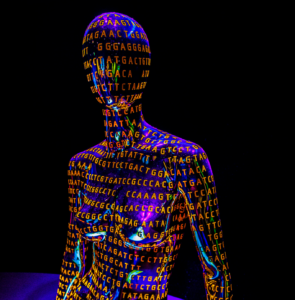
Historically those that would fall under such classification would be considered property and not retain any status of legal personhood. As researchers Glenn, Linda MacDonald, of A Legal Perspective on Humanity, Personhood, and Species Boundaries noted, such boundaries of personhood through this historical lens placed, “slaves, women, and children… (as being) considered “property,” while nonhuman entities, such as corporations, municipalities, and ships, have been recognized and given rights as “persons” (Glenn 2003)”.
Fast forward to the modern-day and we once considered property not having human rights, while the boundaries of legal personhood of corporations and the likes are expanding according to researchers Coleman and Chen.
In Corporate Identity in Citizens United: Legal Fictions and Anthropological Theory, Coleman features significant leaps corporations have made in expanding their personhood status, citing events that led up to the United States Supreme Court’s decision in Citizens United v. Federal Election Commission [2010].
He determined that it was due to our nation’s historical treatment of speech in America such as political donations and expenditures being protected as the 1st Amendment right that expanded such consideration of the right to non-human entities that retained legal personhood already.
The court’s ruling laid such questions to rest as Coleman notes, “any legal distinction between individual and corporate speech in the public sphere” (Coleman), had been eroded.
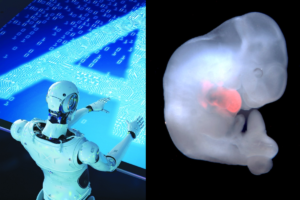
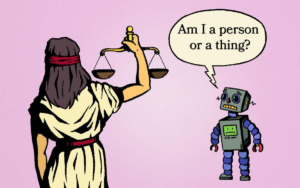
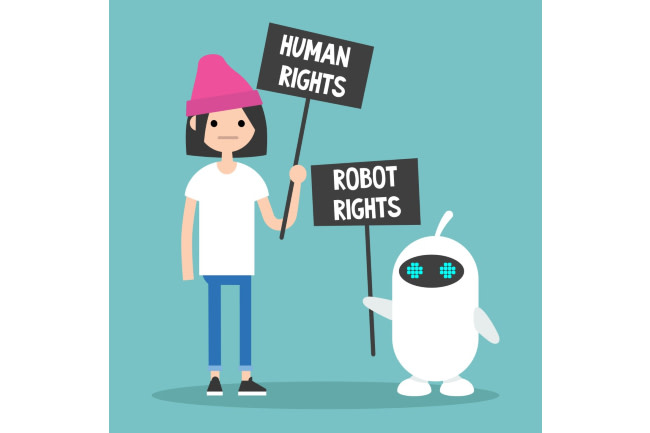
Chen notes other areas in which the legal boundaries of personhood are expanding, such as with artificial intelligence (AI).
He denotes certain classifications used in the modern era that are considered when granting legal personhood. Such being whether an entity has consciousness, and whether it is seeking social recognition or not.
In determining whether society might expand legal boundaries to this new area of personhood for technologies, Chen proposes an analysis of the existing methods used to grant personhood to non-human entities.
He proposes a jurisdiction question be asked, as to who will be recognizing this entity will uncover such boundaries. For example, he states that “the categories of legal persons can be extended by state the categories of legal persons” (Chen).
Elaborating further as to the boundaries states are restricted to, that being that it, “always takes a compelling justification… for states to recognize new types of legal persons.” (Chen).
Citations:
Glenn, Linda MacDonald. “A Legal Perspective on Humanity, Personhood, and Species Boundaries.” The American Journal of Bioethics, vol. 3, no. 3, 2003, pp. 27–28.
Coleman, Leo. “Corporate Identity in Citizens United: Legal Fictions and Anthropological Theory.” Political and Legal Anthropology Review, vol. 37, no. 2, 2014, pp. 308–328.
Chen, Jiahong, and Burgess, Paul. “The Boundaries of Legal Personhood: How Spontaneous Intelligence Can Problematise Differences between Humans, Artificial Intelligence, Companies, and Animals.” Artificial Intelligence and Law, vol. 27, no. 1, 2018, pp. 73–92.