Abstract
Technology is growing in fields of data science and bioengineers, as are the questions on how society is to grant personhood to such conscious entities that are likely to arise from such advancements in these industries. One looming question that this research will attempt to answer is what boundaries of legal personhood ought to exist for nonliving entities versus living nonhuman entities? Some factors that are used in determining these are based upon the legal definition of standing. While others are based under the legal fiction behind non-living entities such as corporations, and living non-human entities such as animals. These existing criteria are essential to consider for granting personhood, with new entities like conscious artificial intelligence likely to arise shortly, and currently existing ones such as human-animal chimeras. This analysis will expand on these criteria that ought to exist when determining the boundaries of legal personhood for nonliving entities versus living nonhuman entities.
Personhood: Legal Standing
The legal doctrine of standing is used in all instances of allotting personhood to an individual, regardless of nonliving entities or living nonhumans currently recognized status. Researcher Staker provides how the requirement of ‘legal standing’ is essential in that “standing operates as a gateway to the legal system… [as this precedent] could eventually lead to ‘the full recognition of non-human beings as subjects of rights” (Staker). Strictly speaking, legal standing allows one to access the legal system. This access is an essential boundary of personhood as, without it, one is not guaranteed relief from conflict through the court system. As in society, we recognize the legal system to be the law of the land that brings judicial resolution to disputes among persons. This component of personhood binds any entity outside the legal system from interfering with those who are within. For example in America’s judicial system, as long as you can provide sufficient stake, you are free to seek out the appropriate legal channels.
In the practice of granting the personhood boundary of legal standing to specifically non-human living beings like animals, distinctions to this approach have arisen. Staker goes on to explain why there has been little expansion accomplished in granting legal standing personhood to living nonhuman entities. She states that “US courts have allowed animal species [though not individual animals] to be named as plaintiffs in several cases… pursued otherwise in a ‘narrow’ procedural sense” (Staker). She explains that the reason behind limiting legal standing to the protection of a selected species class goes further in its achievement than for any single individual. Also, this way does not overly complicate the process, such as failure to protect a certain class rather than a sole individual, or over broadly protecting all species.
Shifting to the practice of bestowing personhood of legal standing to nonliving beings, we would defer to how courts came to establish another boundary of personhood for entities like corporations. It wasn’t until the Supreme Court’s ruling in Citizens United v. Federal Election Commission [2010], that legal standing was granted to corporations in America. Author Coleman noted one major boundary created was that “any legal distinction between individual and corporate speech in the public sphere” (Coleman), had been eroded. This allowance of corporations to engage in free speech practices that had since been prohibited to the nonliving entities, gave them enormous influence in the way they can exercise their rights through personhood. This example shows not only how boundaries can be set through precedent in the court system, but also shows how such decisions exponentially decrease boundaries that once had restricted these entities from the rights of a living human.
Another method to measure the boundaries of personhood for living nonhuman beings can be observed through a historical lens. Analyst Glenn, in A Legal Perspective on Humanity, Personhood, and Species Boundaries, looks at the history of the boundaries of personhood that existed for entities that were living humans but were instead considered to be living nonhuman beings. He references individuals such as, “slaves, women, and children… [who were] considered property” (Glenn) before being considered human. It wasn’t until they made the categorical leap from “rightless” thing [or property], to then becoming a rights holder, now a legal entity fully visible to the courts (Athens). Nonliving nonhumans will continue to be bound to a status comparable to that of a slave, being that they will not be able to exercise nor be recognized as having legal rights under personhood.
Another method at observing the boundaries of legal personhood for nonliving beings can be based upon the determined attributes it possesses. In Chan’s article, The Boundaries of Legal Personhood: How Spontaneous Intelligence Can Problematise Differences between Humans, Artificial Intelligence, Companies, and Animals, she describes five qualifying traits that if found in these entities, then legal personhood may be afforded to them. When looking at corporations as an example we can see that, “the corporate structure of a company is a person of a legal fiction” (Chan), it has no physical form, it has a controlling mind (CEO, the board of directors), it is an artifact of a particular place, and jurisdiction by good nature of its contributors. Breaking down these boundaries we can observe that the entitlement of personhood to corporations is legal fiction because as the name itself is personhood, implying a human person. Also, nowhere beyond what the courts have granted it does a corporation imply a definite qualification for legal personhood. Under closer inspection, it’s noticed that Chan’s description of an entity that possesses a controlling mind is a boundary believed to be intrinsic for receiving personhood, as with humans this is surely a necessary trait we use to grant personhood to each other. A corporation being an artifact status is beholden to a particular area that their dominion is bound by, and this boundary is reflected within their personhood, as with humans our rights do not usually extend beyond our borders. Lastly, a corporation’s jurisdiction established by good nature shows a dependency on maintaining this factor or foregoing one’s rights as a person. For humans this also holds true, being enforced by our policing system. Just as a nonliving entity can produce these attributes when being considered for legal personhood, so should be the criteria they are bound by in their adoption of these rights. Rather than broadly granting legal rights to all entities that fall under these classifications, these factors help in drawing distinctions of attributes to consider in nonliving entities before granting personhood. Such distinctions prove useful when contrasting why different boundaries exist for nonliving entities versus living nonhuman entities.
Similarly, Chan’s research has also outlined other key criteria to measure the boundaries to which legal personhood is permitted for living nonhuman beings. She accounts that these characteristics that must be weighted are: higher-order animals (resembling more human characteristics), respect/recognition of “the moral agency of animals” (Chan), their physical appearance, their lack of cognitive agency/awareness, and their ability to realistically exercise rights, not just on paper. The higher-order refers to some animals being able to benefit more than others from receiving personhood, an example would be a member of the ape family in comparison to one of the insect. This baseline helps unpack the other categories as members of the ape family have more stake in exercising personhood because of the capabilities to understand language as opposed to an ant. This exemplifies candidates who may be capable to participate in respecting the boundaries such as the moral agency of animals, among other things that come with legal personhood. Their physical appearance is a criterion of importance as this narrows the list of animals that can qualify even further. Lastly, a non-human living being’s ability to maintain cognitive awareness is essential to one using their personhood, as well as being able to perform duties as a person rather than simply the law allowing one to do so. Just as before, all these criteria are a baseline that should be tested against any scenario involving living non-human entities and will assist in distinguishing the boundaries for living non-human entities that differ from non-living entities.

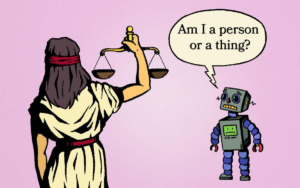
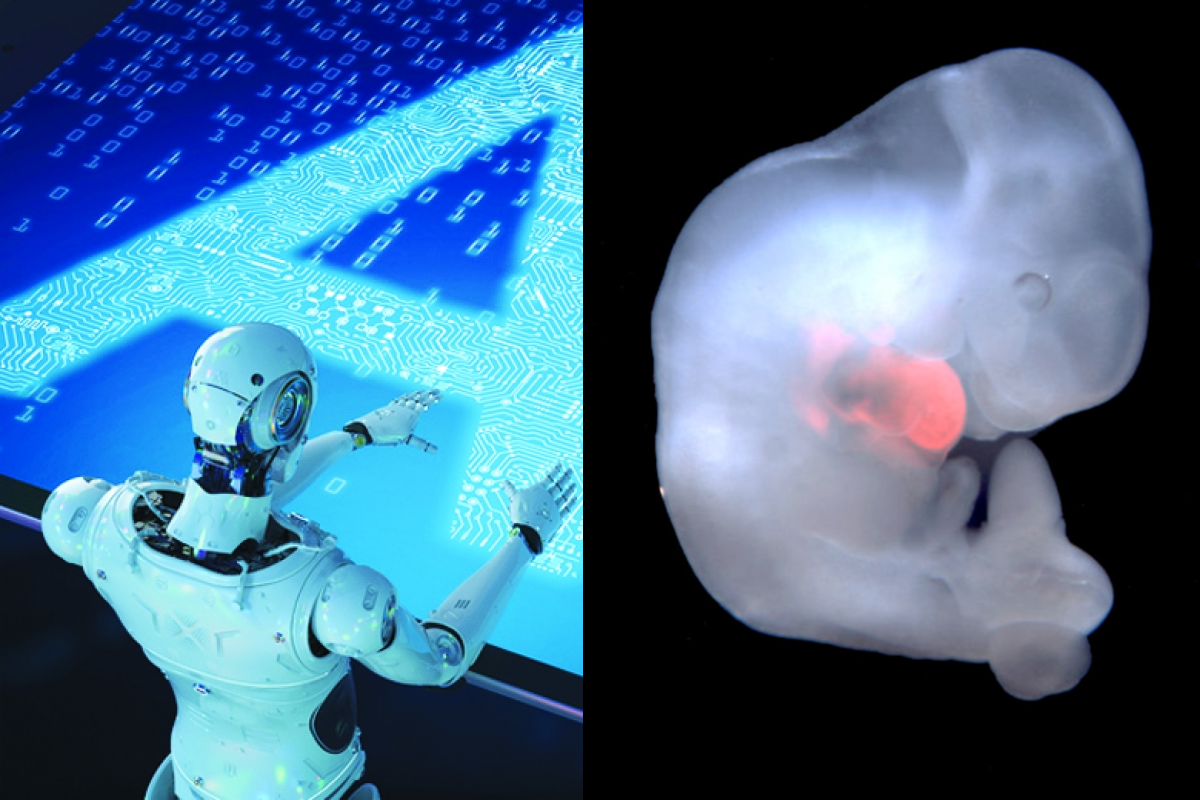
Taking into consideration the existing boundaries for artificial or conscious intelligence, it is clear that there is a focus in the data science field to come up with boundaries and methods of attributing personhood in 21st century America. Fields in artificial intelligence are becoming more and more sophisticated and useful for humans in society. These agencies being able to acquire personhood by meeting qualities similar to other nonliving entities. Researcher Jaynes mentions some criteria that must be met by artificial intelligence such as “attributing consciousness”, producing a “definition of what consciousness [is]”, and how they must be able to perform as a “moral actor” (Jaynes). We have seen these arguments of boundaries of personhood before where the attribution of consciousness gives the impression that AI is more sentient than a robot. Defining what constitutes consciousness will only better narrow personhood for these artificial intelligence entities, while also weighing their abilities to use such consciousness to be considered some moral actor. These are just some of the few boundaries being considered when attempting to grant personhood to AI.
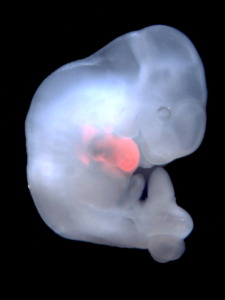
The field of medicine for the 21st century has raised many questions as to how to handle the boundaries of legal personhood for living nonhuman creatures, chiefly for entities being bioengineered through gene-splicing of human and animal DNA. The CRISPR project is used to grow human organs in these hybrid creatures, which can then be harvested and used for medical transplants. With projects showcasing the first human-animal hybrids known as “chimeras… at the Salk Institute in La Jolla, California” (Cripps), scientists have been moving quickly to advance this medicine milestone, but hesitant to produce boundaries of personhood to distinguish subjects that are closer to humans than living nonhumans. Currently, the only boundaries that exist according to researcher Cripps are those formed by concepts of “forced sterilization…[and the] moral utility requirement”. This requirement was upheld by patent law in Supreme Court decisions like Diamond v. Chakrabarty and Ex Parte Allen. Furthermore, the precedent set was that “human beings would not be considered the patentable subject matter” (Cripps). To describe how forced sterilization places a boundary on the legal personhood for these living nonhumans, concepts arose from prominent historical examples such as Charles Darwin’s writings on ‘eugenics’, Plato’s ‘guardian class’ theory, Hitlers ‘Mein Kampf’, and even previous U.S. policies of forced sterilization. All have contributed to benefiting from the power dynamic of those in control of eugenics projects, not having to face any realities of responsibility; for seeing that boundaries of personhood are distributed accordingly based on the characteristics these subjects hold. Moreover, patent law precedents which could also set these boundaries, failed to do so when specific cases of human-animal hybrids had been brought before these judges and agencies. As a result of all parties’ efforts, the boundaries of legal personhood are without any “regulatory systems to prevent inappropriate or abusive applications” (Mintz) of eugenics. Today and going into the future it seems for these living human/animal chimeras their chance at legal personhood is mitigated by all the medical advantages these entities can provide.
To conclude, it is important that we define the boundaries that can be attributed to living nonhumans and non-living entities, as it helps to alleviate concerns in the areas of personhood that need to be addressed in the near future. With the use of data science, the complexities of AI are increasingly growing to resemble humanistic traits. Similarly, medical advancements are coming just as fast, as industries continue to grow human organs inside animal tissue. For these reasons we need to have such boundaries distinguished for nonliving beings like corporations and for nonhuman animals/species to prevent future abuse. In doing so we will have better foresight as to the effects that may follow such a granting of personhood and where to draw the line on the legal boundaries and newly granted rights.
Citations:
Athens, Allison Katherine. “An Indivisible and Living Whole: Do We Value Nature Enough to Grant It Personhood?” Ecology Law Quarterly, vol. 45, no. 2, 2018, p. 187.
Chen, Jiahong, and Burgess, Paul. “The Boundaries of Legal Personhood: How Spontaneous Intelligence Can Problematise Differences between Humans, Artificial Intelligence, Companies and Animals.” Artificial Intelligence and Law, vol. 27, no. 1, 2018, pp. 73–92.
Coleman, Leo. “Corporate Identity in Citizens United: Legal Fictions and Anthropological Theory.” Political and Legal Anthropology Review, vol. 37, no. 2, 2014, pp. 308–328.
Cripps, Yvonne. “The Global Person: Pig-Human Embryos, Personhood, and Precision Medicine.” Indiana Journal of Global Legal Studies, vol. 25, no. 2, 2018, pp. 701–727.
Glenn, Linda MacDonald. “A Legal Perspective on Humanity, Personhood, and Species Boundaries.” The American Journal of Bioethics, vol. 3, no. 3, 2003, pp. 27–28.
Jaynes, Tyler L. “Legal Personhood for Artificial Intelligence: Citizenship as the Exception to the Rule.” AI & Society, vol. 35, no. 2, 2019, pp. 343–354.
Mintz, Rachel L, et al. “Will CRISPR Germline Engineering Close the Door to an Open Future?” Science and Engineering Ethics, vol. 25, no. 5, 2018, pp. 1409–1423.
Staker, Alexia. “Should Chimpanzees Have Standing? The Case for Pursuing Legal Personhood for Non-Human Animals.” Transnational Environmental Law, vol. 6, no. 3, 2017, pp. 485–507.